
Exercise
Oncology
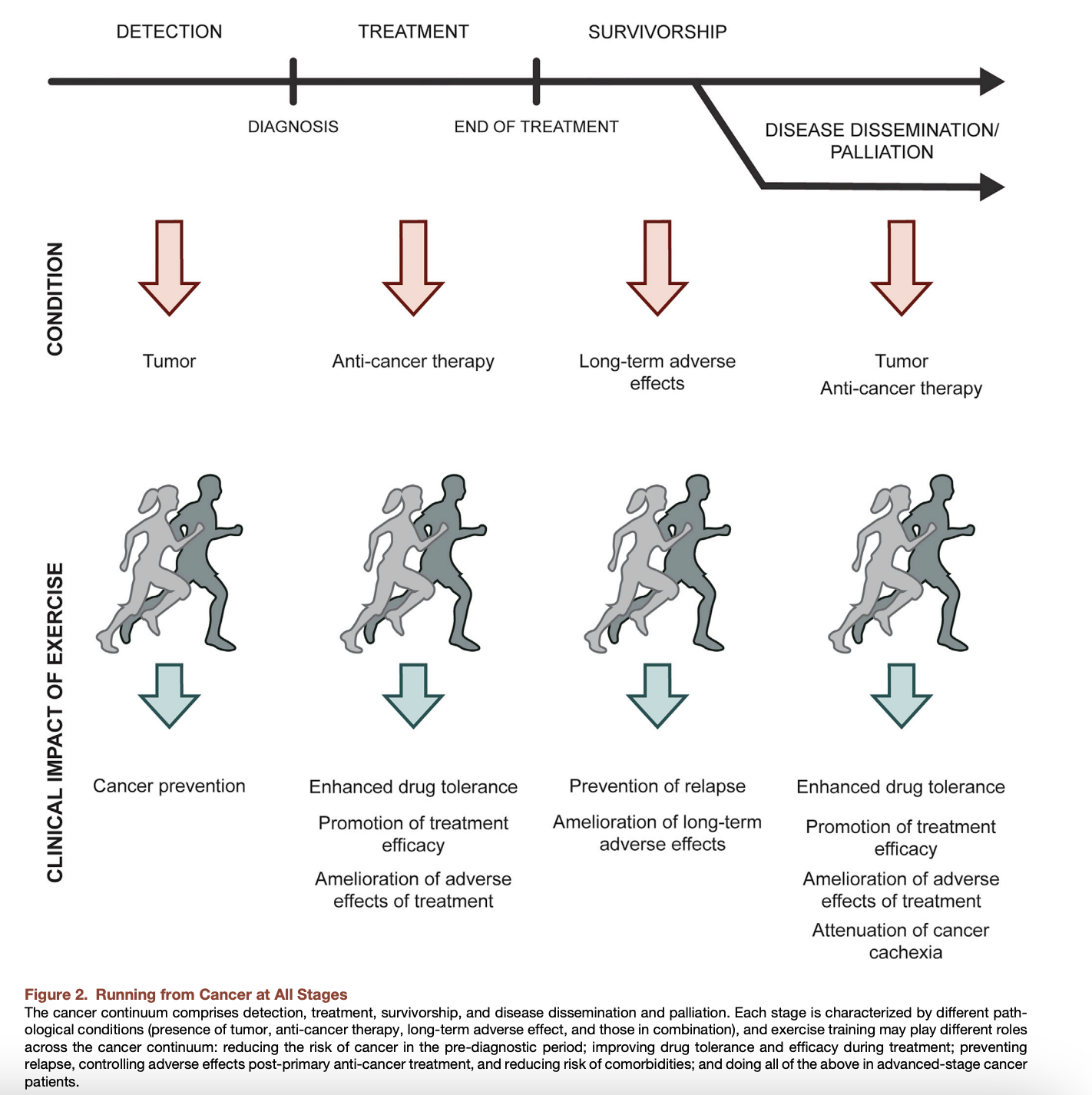
Exercise Physiology Across the Cancer Continuum
Bloom’s Oncology Support Areas
At Bloom, we believe everybody deserves access to movement, support, and high-quality care, regardless of their diagnosis, treatment stage, or physical capacity. Through evidence-based exercise and compassionate, person-centred support, we help individuals move safely and confidently throughout their cancer journey.
With specialised oncology studies completed within a Master of Clinical Exercise Physiology, alongside clinical experience, Bloom delivers tailored exercise interventions that are adapted to each individual's goals, treatment side effects, functional capacity, and lifestyle.
Bloom supports individuals across the entire cancer continuum, including diagnosis, active treatment, end of treatment, survivorship, rehabilitation, palliative care, and advanced cancers. Programs are individually designed to help manage treatment-related side effects, improve physical function, reduce fatigue, and enhance quality of life at every stage of the journey.
Children
Adolescents
Adults
Aged
-
Breast Cancer
Prostate Cancer
Gastrointestinal: Upper GI (Esophageal, Stomach, Liver, Pancreatic, Gallbladder)
Lower GI (Bowel and Colorectal) Cancers
Gynaecological Cancers (Cervical, Uterine/Endometrial, Ovarian)
Melanoma
Lung (NSCLC and SCLC) Cancer
Brain Cancer (Glioma and Non-Glioma Tumours)
Head and Neck Cancers (Mucosal Squamous Cell Carcinomas and Adenocarcinomas)
-
LEUKAEMIA:
Acute myeloid leukaemia (AML)
Acute lymphocytic leukaemia (ALL)
Chronic myeloid leukaemia (CML)
Chronic lymphocytic leukaemia (CLL)
LYMPHOMA:
Non-Hodgkin Lymphoma
Hodgkin Lymphoma
MYELOMA:
Smouldering Multiple Myeloma (SMM)
Multiple Myeloma
-
METASTATIC (STAGE 4)
MX, MO, M1
Osteolytic
Osteoblastic/Sclerotic
-
Children, Teens, Childhood Cancer Survivors, most common being:
Leukaemia (ALL & AML)
Central Nervous System & Brain Cancer
Lymphoma
Soft Tissue
Renal (Wilm’s Tumour)
Bone
Epithelial
Germ Cells
Retinoblastoma
Liver

-
Regular exercise plays an important role in cancer prevention by supporting healthy body composition, improving metabolic health, reducing inflammation, and promoting overall well-being. Maintaining an active lifestyle may help reduce cancer risk while supporting long-term physical and mental health.
-
Exercise can help individuals better tolerate cancer treatment by improving strength, fitness, and physical resilience. Evidence suggests exercise may assist in reducing treatment-related side effects such as fatigue, deconditioning, and loss of muscle mass while supporting overall quality of life throughout treatment.
-
Following treatment, exercise supports recovery by restoring strength, endurance, mobility, and confidence. It can help manage long-term treatment-related side effects, improve functional capacity, and support a return to meaningful daily activities, work, recreation, and community participation.
-
Exercise remains beneficial for individuals living with advanced cancer. Tailored programs can help maintain independence, preserve physical function, reduce fatigue, support symptom management, and enhance quality of life by enabling individuals to continue participating in activities that are meaningful to them.
Clinical Impact of Exercise Across the Cancer Continuum
Hojman, P., Gehl, J., Christensen, J. F., & Pedersen, B. K. (2018). Molecular Mechanisms Linking Exercise to Cancer Prevention and Treatment. Cell metabolism, 27(1), 10–21. https://doi.org/10.1016/j.cmet.2017.09.015
Anti-Oncogenic Effect of Exercise on Cancer
Research has shown that exercise may have “anti-oncogenic” effects, meaning it can help create a healthier environment within the body that may assist in slowing cancer progression and supporting overall health during and after treatment. Exercise can positively influence things such as inflammation, immune function, muscle mass, energy levels, hormone regulation, and overall physical resilience.
Exercise is slowly receiving its recognition as an important part of cancer care and can help improve treatment tolerance, reduce side effects, support recovery, and enhance quality of life throughout the cancer journey.

Muscles Send out Myokines ‘Good Signals’

Moving muscles release helpful substances (Myokines)
These slow down cancer cell growth
Tell damaged cells to die when they should
Boost your immune system’s “soldier cells” (NK cells) that attack cancer
Exercise Reduces “Bad Signals” From Adipose Tissue (Fat)

Excess Adipose Tissue (fat) increases inflammation (Pro Inflammatory Environment)
Excess Adipose Tissue can feed cancer cells and help them spread
Exercise manages Body Composition and reduces harmful signals
Controls Blood Sugar & Hormones
High blood sugar and insulin can fuel cancer
Exercise helps muscles use sugar for fuel
Makes the body more sensitive to insulin
Cuts down the “growth signals” that cancer depends on
Strengthens the Immune System
Exercise triggers small bursts of helpful chemicals
This activates immune cells and sends them straight to tumours
This helps your body fight cancer more effectively and bounce back from treatment!
Improves Blood Flow & Treatment Success
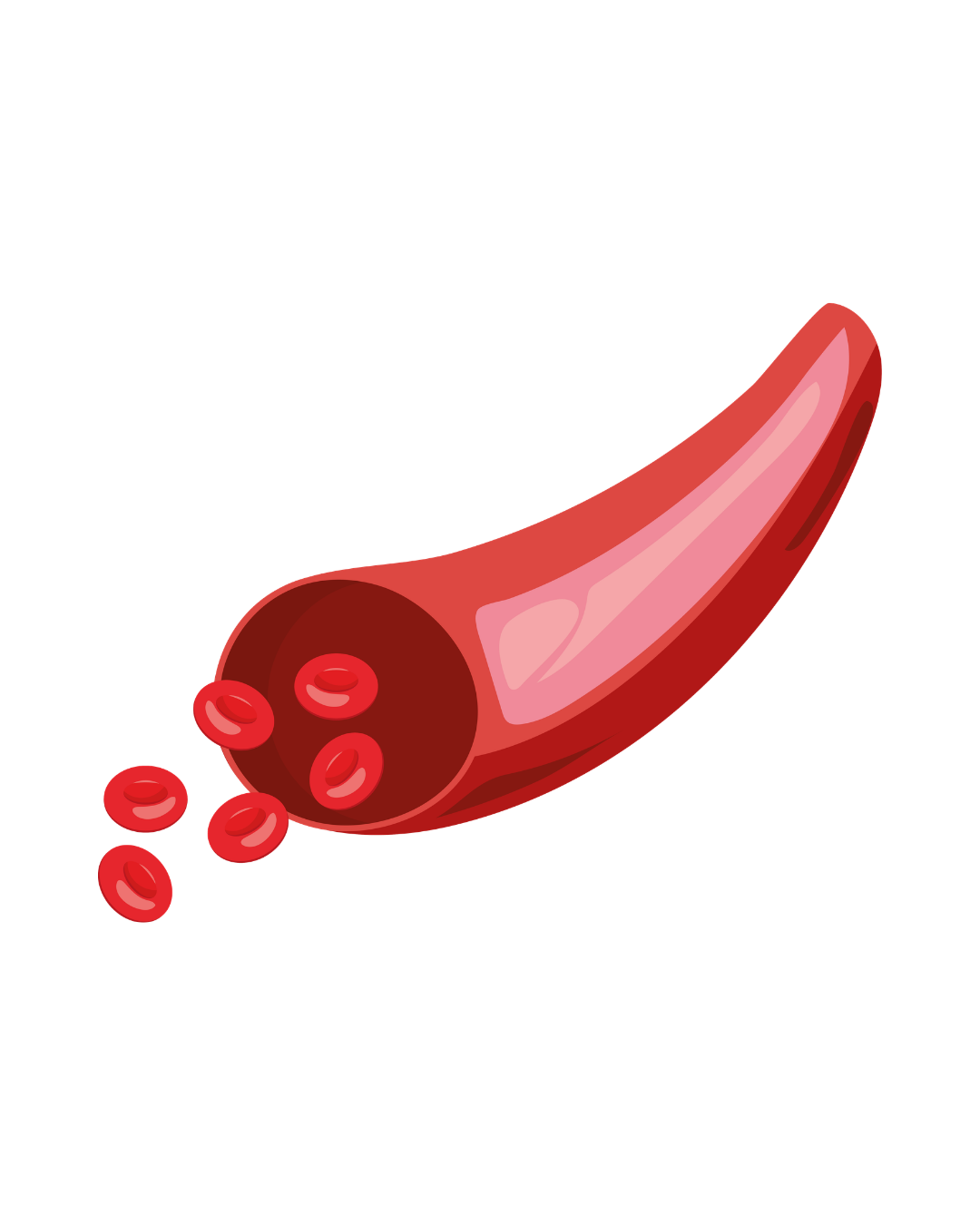
Exercise builds healthier blood vessels
Brings more oxygen, immune cells, and treatments to tumours
Makes treatment (chemotherapy and radiation) work better!
Exercise to Ease Treatment Related Side Effects
Every cancer journey is different, and treatment can affect the body in many ways. Evidence-based exercise has been shown to help manage, reduce, and support a wide range of treatment-related side effects. Below are some common symptoms and challenges that appropriately prescribed exercise can assist with throughout and after cancer treatment.
HELPING THE BODY COPE WITH PHYSICAL CHANGES
Pain, stiffness, or limited movement
Chemotherapy-induced peripheral neuropathy (CIPN)
Lymphedema
BONE LOSS (Osteopenia / Osteoporosis
Changes in BODY COMPOSITION
Incontinence
EASING WHOLE BODY TREATMENT SIDE EFFECTS
Fatigue
CANCER-RELATED CARDIAC DYSFUNCTION (cardiotoxicity)
“Chemo brain” (memory and concentration)
SLEEP DISTURBANCES
Hot flushes (from hormone therapy)
Fibromyalgia
SUPPORTING MENTAL HEALTH AND QUALITY OF LIFE
Improve Mood and emotions: endorphins, dopamine and serotonin
Improve Quality of Life
Support Independence
Boost SELF CONFIDENCE, self-efficacy, and self-esteem
Build completion of routine
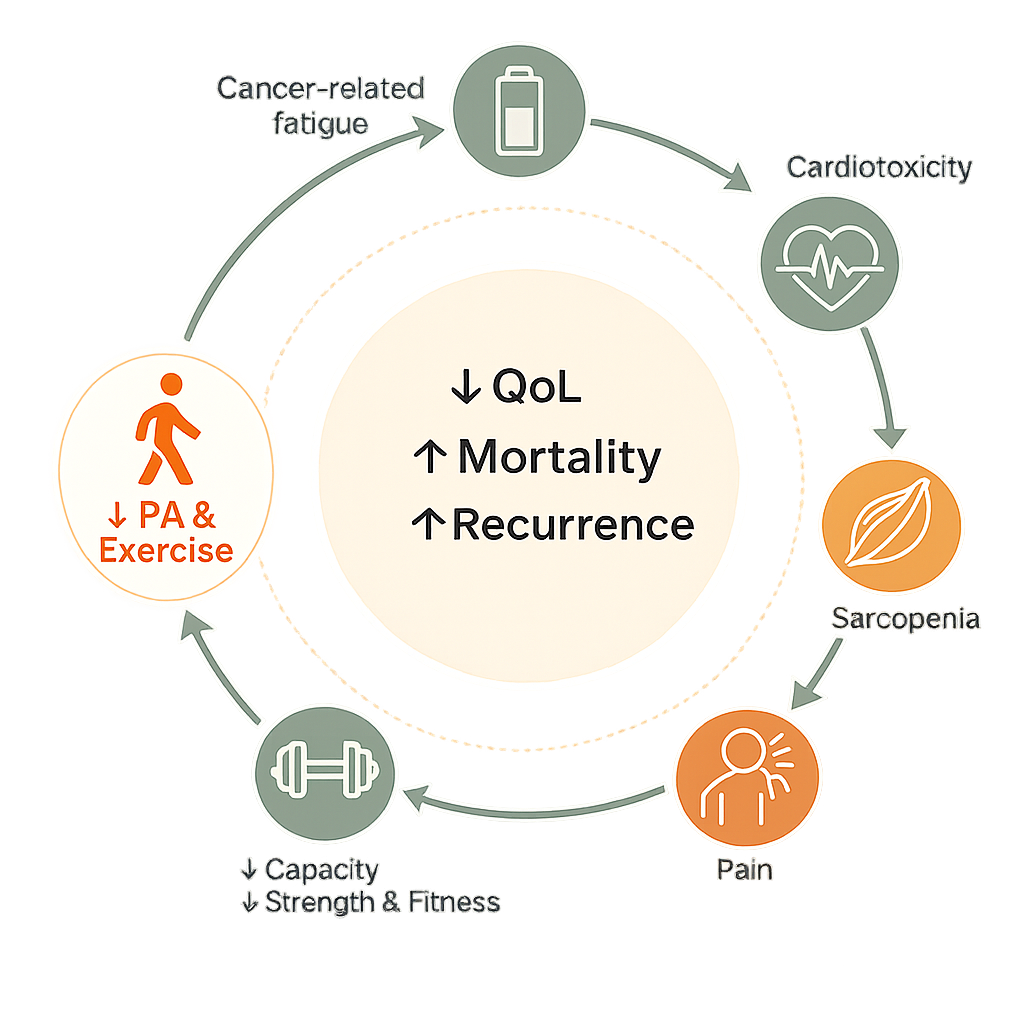
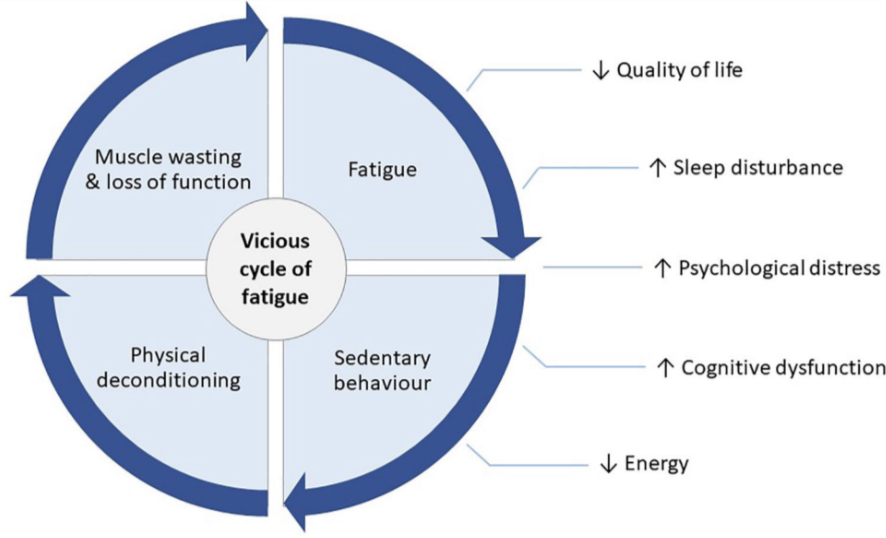
Breaking the Inactivity Cycle & The Vicious Cycle of Fatigue
Accumulation of treatment-related side effects contributes to reduced physical activity. Continued sedentary behaviour can worsen current side effects + contribute to the development of other co-occurring diseases. The cycle continues by disengaging in exercise
What is the Inactivity Cycle?
Breaking this cycle by engaging in physical activity helps reduce the negative impacts of anti-cancer treatments + boosts energy, thus helping manage symptoms, which can encourage you to ‘feel’ like exercising!
Why is this Important?
Single bouts of any physical activity are proven to reduce fatigue, which can boost energy levels for exercise! Any exercise (ie breaking up long periods of sitting with standing/walking) is better than nothing! But if you are unsure about what to do/want guidance around safety, then seeing Bloom AEP is a great start!
What can you do right now?
Piraux, E., Caty, G., Aboubakar Nana, F., & Reychler, G. (2020). Effects of exercise therapy in cancer patients undergoing radiotherapy treatment: a narrative review. SAGE open medicine, 8, 2050312120922657. https://doi.org/10.1177/2050312120922657
Bloom’s Services Provided
Assessment, Goal Setting & Planning
Your initial consultation is all about understanding you, your diagnosis, and where you are in your cancer journey. Bloom takes a holistic, person-centred approach to learn about your goals, lifestyle, treatment pathway, and any challenges you may be experiencing. By building rapport and completing a comprehensive assessment, we can safely prescribe exercise that is tailored to your individual needs, treatment stage, and personal goals.
Our comprehensive assessment may include:
Goals and Priorities
Complete medical and cancer history
Cancer diagnosis, stage, treatment pathway, and current treatment phase (pre-treatment, active treatment, rehabilitation, survivorship, or palliative care)
Personal goals, priorities, and meaningful activities
Current physical function, mobility, strength, balance, range of motion, and aerobic capacity through clinical exercise assessments
Cancer treatment-related side effects including (but not limited to) fatigue, pain, neuropathy, lymphoedema considerations, reduced mobility, deconditioning, and functional limitations
Medical history, medications, contraindications, and exercise risk stratification
Lifestyle, interests, exercise preferences, strengths, and individual considerations
Motivational interviewing and behaviour change strategies to support long-term exercise participation
Education on the role of exercise in managing treatment side effects, improving physical function, and enhancing quality of life.
Following your assessment, an individualised, evidence-based exercise program is developed to align with your diagnosis, treatment stage, current health status, functional capacity, and personal goals. Ongoing progress monitoring, regular reassessments, and exercise progression ensure your program remains safe, effective, and responsive to changes throughout your cancer journey.
Individualised Exercise Programs
Goal Setting & Progress Monitoring
Subjective & Objective Outcome Monitoring

Exercise Physiology Interventions
Every exercise program at Bloom is individually prescribed using current Exercise Oncology guidelines and evidence-based practice. Interventions are tailored to your cancer diagnosis, treatment stage, treatment-related side effects, functional capacity, goals, and medical considerations. Using clinical reasoning and ongoing assessment, exercise is adapted throughout your cancer journey to ensure it remains safe, effective, and responsive to your changing needs.
Our Exercise Physiology interventions may include:
Strength Training
Aerobic & Cardiovascular Conditioning
Exercise Periodisation Around Cancer Treatment (tailoring exercise intensity and volume around chemotherapy, radiotherapy, immunotherapy, surgery, or other treatments)
Cancer Rehabilitation & Survivorship Exercise
Prehabilitation Before Surgery or Treatment
Fatigue Management
Exercise to Reduce Treatment-Related Side Effects
Functional Capacity & Activities of Daily Living Training
Gait Retraining
Balance, Coordination & Proprioception Training
Falls Prevention
Power & Functional Performance Training
Mobility & Functional Movement Training
Flexibility & Range of Motion Enhancement
Lymphoedema Exercise Considerations
Neuropathy & Balance Rehabilitation
Exercise for Bone Health & Metastatic Bone Disease Considerations
Exercise for Pain Management
Secondary Disease Prevention & Management
Exercise Following Cancer Surgery
Return to Work, Recreation & Community Participation
Healthy Ageing Through Exercise
Physical Activity Coaching, Education & Lifestyle Support
Individualised Home Exercise Programs & Progressions

Exercise Across the Cancer Continuum
At Bloom, exercise is prescribed across every stage of the cancer journey. Whether you're preparing for treatment, undergoing active treatment, recovering afterwards, or living beyond cancer, exercise is tailored to your diagnosis, treatment stage, functional capacity, and individual goals to help optimise outcomes and improve quality of life.
Services include:
Prehabilitation before surgery and cancer treatment
Exercise during chemotherapy, immunotherapy, radiotherapy, hormonal therapy, and targeted therapies
Exercise throughout stem cell transplant recovery
Exercise periodisation around treatment cycles to support recovery and symptom management
Post-surgical rehabilitation
Cancer rehabilitation programs
Survivorship exercise programs
Return to daily activities, work, recreation, and community participation
Long-term exercise planning to support health, function, and quality of life following treatment
Managing Treatment-Related Side Effects
Cancer treatment can affect every individual differently. At Bloom, exercise is carefully prescribed to help prevent, reduce, and manage many of the physical and functional side effects associated with cancer and its treatment. Every program is individually tailored to your diagnosis, treatment stage, symptoms, and goals, helping you maintain independence, improve quality of life, and continue participating in the activities that matter most.
Services may include:
Cancer-Related Fatigue Management
Muscle Loss (Sarcopenia) Prevention
Physical Deconditioning Management
Neuropathy Rehabilitation
Pain Management Through Exercise
Balance & Falls Prevention
Bone Health & Osteoporosis Management
Exercise for Bone Metastases (where clinically appropriate)
Lymphoedema Exercise Considerations
Joint Pain, Stiffness & Mobility Management
Mobility & Functional Movement Training
Exercise to Improve Functional Capacity & Activities of Daily Living
Cardiovascular Fitness & Exercise Tolerance
Exercise for Cachexia
Management of Treatment-Related Weakness & Loss of Physical Function
Exercise for Reduced Endurance & Breathlessness
Postural Strength & Movement Retraining
Return to Daily Activities, Work & Recreation
Exercise to Improve Confidence, Independence & Quality of Life
Healthy Ageing Throughout the Cancer Journey
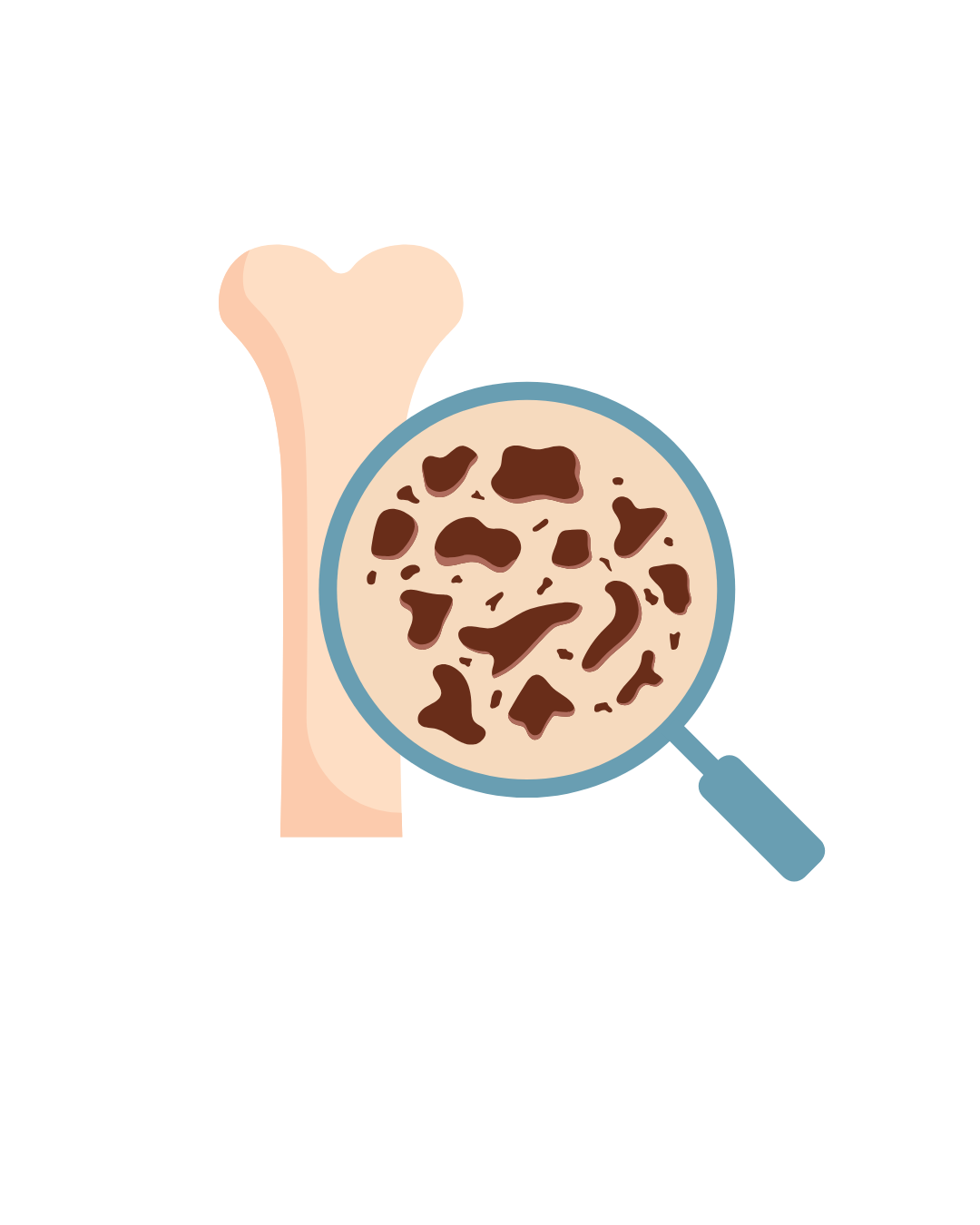
Health & Overall Wellbeing
At Bloom, we believe exercise is about much more than improving physical function. We take a holistic approach that recognises the strong connection between physical, emotional, and social wellbeing. Through education, empowerment, and compassionate support, we aim to build confidence, self-efficacy, resilience, and independence, helping individuals feel more in control of their health while improving their overall quality of life throughout their cancer journey.
Services may include:
Safe Physical Activity Coaching
Behaviour Change & Motivational Interviewing
Fatigue & Energy Conservation Education
Exercise Education
Healthy Lifestyle Coaching
Weight Management Support
Chronic Disease Management
Building Confidence & Self-Esteem
Improving Self-Efficacy & Independence
Emotional Wellbeing Support Through Exercise
Stress, Anxiety & Mood Management
Goal Setting & Long-Term Behaviour Change
Developing Sustainable Healthy Habits
Promoting Social Connection & Community Participation
Improving Sleep, Recovery & Energy Levels
Building Exercise Confidence for Lifelong Health

Mobile & Flexible Service Delivery
Bloom provides mobile Exercise Physiology services across all of Sydney with no distance travel limits. By bringing services directly to you, we can deliver support in the comfort and familiarity of your home, local community, gym, or preferred environment, helping to maximise convenience, participation, and real-world outcomes.
Home Visits
School-Based Sessions
Residential Facility Sessions
Respite Home Visits
Community-Based Sessions
Gym-Based Sessions
Hydrotherapy
Telehealth Services
Education & Support
Education is a cornerstone of Exercise Oncology and plays an essential role in achieving long-term health outcomes. At Bloom, we believe understanding why exercise is prescribed is just as important as completing the exercises themselves. We empower individuals, families, and carers with the knowledge, confidence, and practical skills to safely incorporate exercise into everyday life, understand the physiological benefits of movement, and self-manage treatment-related side effects throughout the cancer journey. Through education and ongoing support, we aim to build confidence, promote independence, and empower individuals to take an active role in their recovery, rehabilitation, and long-term wellbeing.
Services may include:
Participant, Family & Carer Education
Education on the role of exercise before, during, and after cancer treatment
Understanding the physiological benefits of exercise throughout the cancer continuum
Education on managing treatment-related side effects through exercise
Exercise safety education, including treatment-specific considerations and precautions
Guidance on appropriate exercise intensity, frequency, and progression
Individualised Home Exercise Programs
Lifestyle & Physical Activity Coaching
Behaviour Change & Motivational Interviewing
Self-Management Skills Development
Building confidence and independence with exercise
Strategies to develop sustainable exercise habits and healthy lifestyle behaviours
Long-Term Health, Recovery & Survivorship Planning
Education to support lifelong physical activity and improved quality of life

Multidisciplinary Care & Clinical Collaboration
Cancer care is most effective when healthcare professionals work together. At Bloom, we believe collaborative, multidisciplinary care is essential to delivering safe, evidence-based exercise interventions that remain aligned with your treatment plan, medical considerations, and personal goals. Through regular communication, progress monitoring, and clinical reporting, we work closely with your treating team to ensure exercise is appropriately prescribed throughout every stage of your cancer journey. All documentation and recommendations are completed within the Exercise & Sports Science Australia (ESSA) Accredited Exercise Physiologist Scope of Practice and in accordance with current professional, ethical, and legislative standards.
Services may include:
Clinical Progress Reports & Outcome Monitoring
Exercise Physiology Assessment & Review Reports
Goal Review & Ongoing Progress Monitoring
Communication with Oncologists, Haematologists, GPs, Surgeons & Treating Specialists
Collaboration with Cancer Care Nurses & Hospital Teams
Multidisciplinary Team Meetings & Case Conferences
Communication with Allied Health Professionals
Collaboration with Family Members & Carers (with consent)
Exercise Prescription Reviews & Clinical Recommendations
Return-to-Work, Function & Independence Planning
Care Coordination & Shared Clinical Decision-Making
Evidence-Based Recommendations to optimise physical function, manage treatment-related side effects, and improve quality of life throughout the cancer continuum.

Non Face to Face Supports (NF2F)
Some Exercise Oncology supports occur outside of face-to-face sessions and are essential for safe, personalised care. These may include clinical notes, program development, treatment-related exercise planning, progress monitoring, report writing, and communication with your healthcare team.
Where applicable, NF2F supports are only billed when directly related to your care, discussed transparently, and agreed upon within your Service Agreement. Fees are charged in line with your selected funding pathway or Bloom’s current fee schedule.
Non-face-to-face clinical supports may include:
Clinical documentation and post-session case notes
Individualised exercise program development, progression, modification & goal review
Session planning and clinical preparation
Review of medical information, referrals, pathology, and treating specialist recommendations
Report writing and clinical outcome measurement
Communication with participants, families, and carers
Liaison with oncologists, GPs, surgeons, cancer care nurses, and allied health professionals
Multidisciplinary care coordination and case conferences

Provider Travel
As a fully mobile Exercise Physiology service, Bloom provides home, community, gym, school, respite care, and residential facility visits across all of Sydney, with no travel distance limit. Where applicable, provider travel is charged in accordance with your funding pathway (e.g. NDIS or Support at Home) or BLOOM's current private fee schedule. Any applicable travel charges will be discussed transparently and agreed upon within your Service Agreement before commencing services.
Funding
Bloom’s fees are determined based on the specialised nature of oncology Exercise Physiology services, clinical expertise, mobile service delivery, and current industry standards within the allied health market. Pricing reflects the level of individualised care, evidence-based exercise prescription, clinical reasoning, ongoing education, and multidisciplinary collaboration provided throughout each participant’s journey.
Fees may vary depending on the funding pathway being accessed, as different schemes such as NDIS operate under their own pricing structures, claiming processes, and travel guidelines.
All fees are reviewed annually and may be adjusted in line with changes to funding arrangements, industry standards, operating costs, and relevant pricing updates. Any fee changes will be communicated transparently to participants prior to implementation.
-
Referral from your GP is required under the Chronic Disease Management Plan.
Up to 5 allied health sessions per calendar year
Medicare rebate available for eligible clients. Current Rebate is $61.80 per eligible session.
Sessions may involve an out-of-pocket gap fee
Ideal for individuals managing chronic or complex health conditions
-
SUPPORTS
Support Item Name: Therapy - Exercise Physiologist - Direct Service
12_027_0126_3_3 / 12_027_0128_3_3 / 15_200_0126_1_3 / 15_200_0128_1_3
Support Item Name: Therapy - Exercise Physiologist - Cancellation
12_027_0126_3_3_CA2 / 12_027_0128_3_3_CA / 15_200_0126_1_3_CA / 15_200_0128_1_3_CA
Support Item Name: Therapy - Exercise Physiologist - Non-Face-to-Face
12_027_0126_3_3_NF / 12_027_0128_3_3_NF / 15_200_0126_1_3_NF / 15_200_0128_1_3_NF
Support Item Name: Therapy - Exercise Physiologist - Provider Travel
12_027_0126_3_3_PT / 12_027_0128_3_3_PT / 15_200_0126_1_3_PT / 15_200_0128_1_3_PT
Support Item Name: Therapy - Exercise Physiologist - NDIA Requested Reports
12_027_0126_3_3_RR / 12_027_0128_3_3_RR / 15_200_0126_1_3_RR / 15_200_0128_1_3_RR
Support Item Name: Therapy - Exercise Physiologist - Telehealth
12_027_0126_3_3_TH / 12_027_0128_3_3_TH / 15_200_0126_1_3_TH / 15_200_0128_1_3_TH
Unit: Hour
Price:
National: $161.99
Remote: $226.79
Very Remote: $242.99
Please note that Support Costs apply in accordance with the NDIS pricing schedule effective 1st July 2026.
-
Rebates may be available through eligible extras cover
Amount claimable depends on individual health fund and level of cover
Pay upfront and claim directly through insurer
-
Bloom welcomes privately paying clients seeking personalised Exercise Physiology support for cancer rehabilitation, chronic disease management, healthy ageing, disability, injury recovery, or general health and wellbeing. Private clients benefit from flexible access to evidence-based exercise services without the need for a referral or third-party funding approval.
For individuals managing chronic health conditions, a Chronic Disease Management (CDM) plan through your GP may also be beneficial, as it can provide access to Medicare rebates for Exercise Physiology services -
Older adults may be able to access Exercise Physiology services through their Support At Home Package. Depending on how your package is managed, Bloom can work directly with you, your family, and your care provider to deliver personalised exercise support aimed at maintaining strength, independence, mobility, and quality of life.
We recommend speaking with your care manager to determine whether Exercise Physiology services can be included within your individual care plan and budget. If you are unsure whether Exercise Physiology is available within your package, we are happy to assist you in exploring your options.
“Everybody Deserves to ‘BLOOM’”
-
An Accredited Exercise Physiologist (AEP) is a university-qualified allied health professional who specialises in prescribing evidence-based exercise to support individuals living with disabilities, chronic conditions, injuries, and complex health needs. Exercise Physiology focuses on improving strength, mobility, independence, wellbeing, and overall quality of life through tailored movement and exercise programs.
-
Yes! Research shows that appropriately prescribed exercise by an Accredited Exercise Physiologist (AEP) during cancer treatment is generally safe and can provide significant physical and emotional benefits. All exercise is individualised based on your diagnosis, treatment, side effects, medical history, and current capacity.
-
No referral is required to access Bloom's Exercise Physiology services
However, referrals are always welcome from:
• General Practitioners (GPs)
• Oncologists & Haematologists
• Cancer Care Nurses
• Surgeons
• Allied Health Professionals
• Hospital & Cancer Rehabilitation Teams
• Care Coordinators & Case Managers
• Family Members & Carers
• Self-Referrals
-
Exercise may help manage a wide range of treatment-related side effects, including fatigue, weakness, reduced fitness, loss of muscle mass, balance difficulties, neuropathy, joint stiffness, reduced mobility, low mood, and decreased confidence with movement.
-
Your health and safety always come first. Every session is individually tailored based on how you are feeling that day, taking into account your energy levels, symptoms, treatment cycle, and overall wellbeing. Using your subjective feedback and ongoing clinical assessment, Bloom will safely modify or autoregulate the session as needed. This may involve reducing the intensity, duration, or type of exercise, or focusing on gentle movement, mobility, breathing, or recovery strategies.
Even on more challenging days, appropriately prescribed exercise can help manage treatment-related side effects while ensuring your safety and comfort. -
Yes. Evidence-based prescription, prescribed appropriately & monitored by an Accredited Exercise Physiologist (AEP), can still be performed safely with bone metastases. Programs are carefully modified to reduce unnecessary risk while supporting strength, function, mobility, and quality of life.
-
Bloom is a mobile Exercise Physiology service all over Sydney! Meaning sessions can be completed:
At Home
In the Community
At the Gym
In School
Residential Facility
Respite Care
Or via Telehealth where appropriate
Sessions are tailored to the environment you feel most comfortable, engaged, and supported.
-
The initial assessment helps Bloom understand your cancer diagnosis, treatment stage, medical history, current health, goals, and any treatment-related side effects to ensure exercise is prescribed safely and effectively.
The assessment may include:
• Goals and priorities
• Cancer diagnosis, stage, and treatment pathway
• Current treatment stage and treatment-related side effects
• Medical history, medications, and risk stratification
• Physical function, mobility, strength, balance, and aerobic capacity
• Fatigue, pain, and functional capacity
• Lifestyle, exercise preferences, and individual considerations
• Movement screening, strength, balance, aerobic fitness, mobility and functional capacity assessments
This information allows every exercise program to be tailored to your unique needs, treatment journey, and personal goals.
-
Every person’s cancer experience is unique, which means every exercise program is individually tailored.
Programs are designed based on:
Cancer diagnosis and treatment stage
Treatment-related side effects
Medical history and risk stratification
Current physical capacity and fitness levels
Fatigue and energy levels
Mobility and functional abilities
Personal goals
Confidence and exercise experience
Lifestyle, preferences, and interests
At Bloom, we believe exercise should feel safe, achievable, and empowering, supporting you through every stage of your cancer journey with evidence-based, person-centred care.
-
Yes! Bloom values transparent communication and collaborative, multidisciplinary care.
With your consent, session notes, progress updates, and clinical reports can be shared with your healthcare team to ensure coordinated, person-centred care. This may include:
• General Practitioners (GPs)
• Oncologists & Haematologists
• Cancer Care Nurses
• Treating Specialists
• Allied Health Professionals
• Hospital & Cancer Rehabilitation Teams
• Care Coordinators & Case Managers
• Family Members & Carers
• Other healthcare providers as requested
-
Yes! Exercise remains highly beneficial following treatment and may assist with:
Rebuilding strength
Improving fitness & muscular strength
Reducing & managing long-term treatment-related side effects
Supporting bone and heart health
Improving confidence
Reducing fatigue
Enhancing long-term wellbeing and survivorship outcomes.
-
Bloom offers a range of funding options to make Exercise Physiology services as accessible as possible. Depending on your individual circumstances, you may be eligible to access services through:
• Medicare (Chronic Disease Management Plan)
• National Disability Insurance Scheme (NDIS)
• Private Health Insurance (where eligible)
• Support at Home / Home Care Packages
• Private Paying Clients
If you're unsure which funding option is right for you, Bloom is happy to discuss your eligibility and help you explore the most suitable pathway!
-
Getting started is simple!
Contact Bloom via email, phone or fill out Bloom’s Enquiry Form on Bloom’s Website
Complete an Initial assessment & determine goals
Develop an individualised program
Begin tailored Exercise Physiology assessments/sessions
Bloom is always happy to answer questions and support you and your family through the process.
Frequently Asked Questions
Let's Bloom Together
Every journey begins with a single step…but you don't have to do it alone! Complete the enquiry form below, and we'll be in touch to explore how we can support you to move, thrive, and bloom!